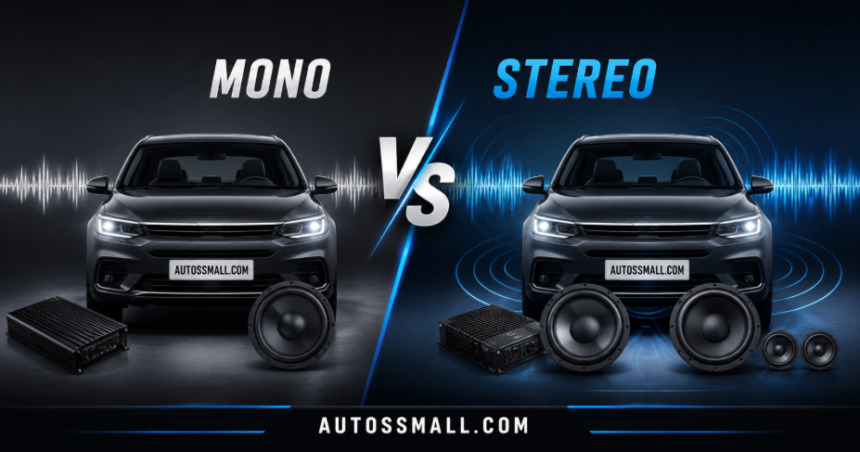
Sound is something we experience every single day, whether we are driving, listening to music at home, or watching a movie with friends. Most people never stop to think about how that sound actually reaches their ears, yet the format behind it makes a huge difference. Two of the most common formats are mono and stereo, and each one creates a completely different listening experience. Understanding this difference can help you make smarter choices, especially when setting up a car audio system or a home speaker setup. In this article, we will explain both formats in a simple, easy to follow way.
What Is Mono Sound?
Mono, short for monophonic, means that all the audio is combined into a single channel. Every speaker connected to a mono system plays the exact same signal at the exact same time, with no separation between left and right. This creates a simple, unified sound that comes from one direction rather than spreading across a space. Mono was actually the original way audio was recorded and played before stereo technology became common. Even today, mono is still widely used in situations where clarity and simplicity matter more than depth, such as public announcement systems or certain subwoofer setups.
What Is Stereo Sound?
Stereo, short for stereophonic, uses two separate audio channels, usually labeled left and right. This allows different sounds or slightly different versions of the same sound to be sent to different speakers, creating a sense of width and space. When you listen to stereo audio through headphones or a proper two speaker setup, you can actually hear instruments or voices coming from different directions. This is what gives music a more natural, immersive, and realistic feeling compared to mono. Most modern music, movies, and car audio systems are designed around stereo sound because listeners generally prefer that richer experience.
The Core Difference Between Mono and Stereo
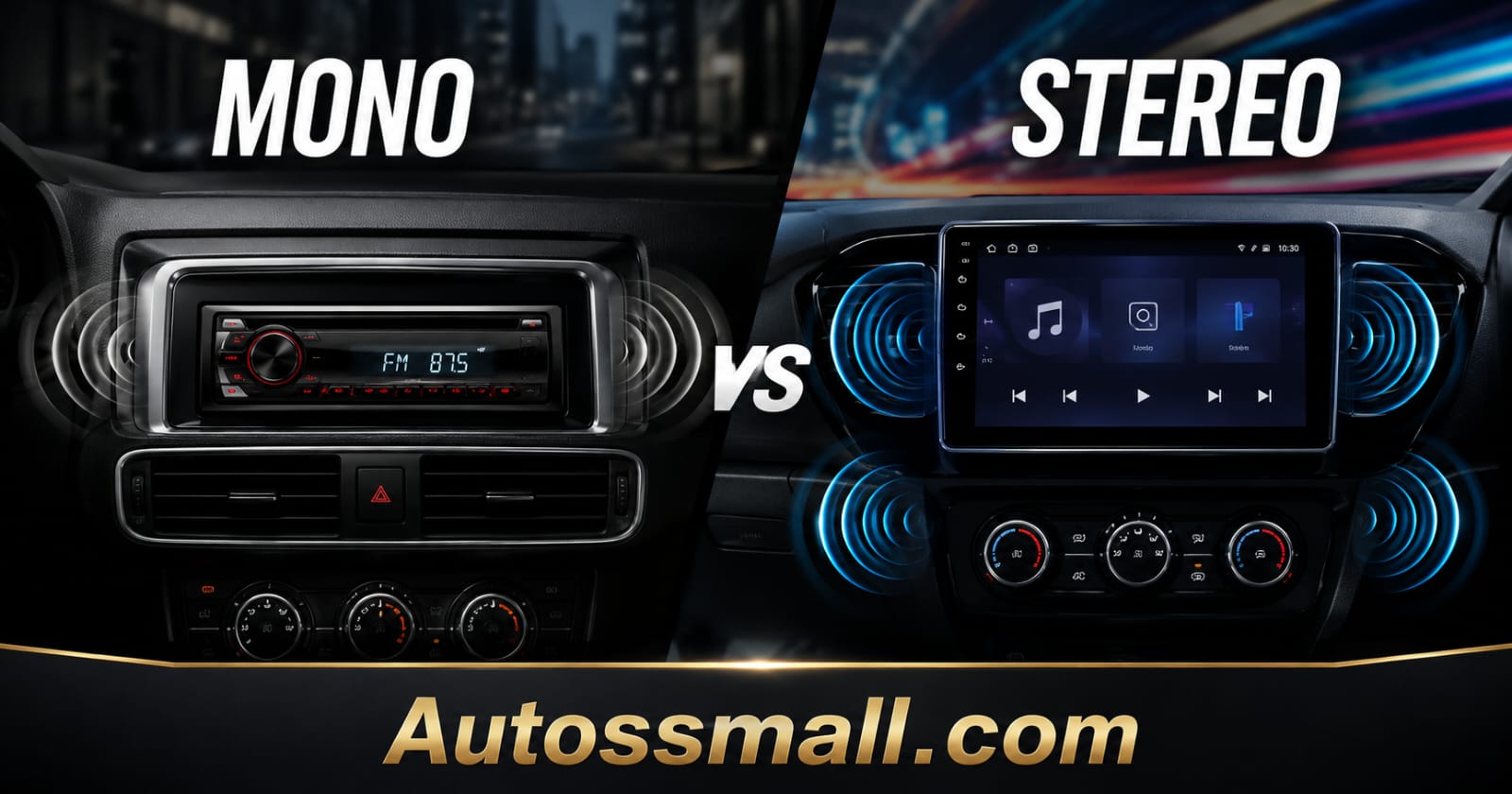
The simplest way to understand the difference is to think about direction and depth. Mono gives you one flat layer of sound with no sense of space, while stereo gives you two channels that create width and positioning. In mono, a guitar and a vocal might sound like they are coming from the same exact spot. In stereo, that same guitar could sound like it is slightly to the left while the vocal sits more in the center. This positioning is called the stereo image, and it is the main reason stereo sound feels more lifelike and enjoyable for most listeners.
Mono vs Stereo in Car Audio Systems
When it comes to car audio, this topic becomes even more practical and important. Many car owners are confused about whether they need a mono amplifier or a stereo amplifier for their vehicle. A mono amplifier is generally used to power a single subwoofer or a group of subwoofers, since bass frequencies do not really need left and right separation to sound powerful. A stereo amplifier, on the other hand, is used to power your regular speakers, such as the ones in your doors or dashboard, because music sounds much better with proper left and right separation in a car cabin.
Why Mono Amplifiers Are Popular for Bass
If you have ever wondered why almost every serious subwoofer setup uses a mono amplifier, the answer lies in efficiency and power. Bass frequencies are non directional, which means our ears cannot really tell where a deep bass sound is coming from inside a car. Because of this, manufacturers combine both channels into one strong mono signal, which allows the amplifier to push more power into the subwoofer. This results in tighter, deeper, and more controlled bass compared to running a subwoofer off a regular stereo channel. This is exactly why mono amps are the standard choice for bass in car audio setups.
Why Stereo Speakers Are Essential for Music
While mono works perfectly for bass, it simply cannot compete with stereo when it comes to actual music enjoyment. Stereo speakers allow you to hear the true character of a song, including subtle details like backing vocals, instrument separation, and spatial effects that producers intentionally add during mixing. Inside a car, a proper stereo setup with front and rear speakers can make the cabin feel like a small concert hall rather than a flat box of sound. This is why most factory and aftermarket car speaker systems, apart from the subwoofer, are always built around stereo technology rather than mono.
Advantages of Choosing Mono Sound
Mono sound still has real advantages depending on the situation you are dealing with. It is easier to set up, requires less wiring complexity, and works reliably even with a single speaker or a basic sound system. Mono is also extremely useful for voice based content, such as announcements, podcasts, or phone calls, where clarity matters far more than spatial effects. Additionally, mono signals tend to translate well across different playback devices, meaning the sound stays consistent whether you play it on a phone speaker or a large sound system. This reliability is a major reason mono is still relevant today.
Advantages of Choosing Stereo Sound
Stereo sound offers a richer, more detailed, and far more enjoyable listening experience overall, especially for music and movies. It creates a natural sense of space that makes audio feel alive rather than flat and one dimensional. In a car, stereo speakers allow passengers in different seats to enjoy a balanced sound field instead of everything coming from one single point. Stereo also gives audio engineers more creative freedom, allowing them to place sounds precisely within a mix. For anyone who genuinely cares about music quality, stereo is almost always the better choice for everyday listening.
Which One Should You Choose for Your Car?
The honest answer is that you do not really have to choose only one, since most great sounding car audio systems actually use both formats together. A mono amplifier is ideal for powering your subwoofer and delivering strong, clean bass, while a stereo setup handles your midrange and treble speakers for detailed, immersive music. This combination gives you the best of both worlds, deep punchy bass along with wide, realistic sound. If your current setup only uses one format, upgrading to this combined approach is often the easiest way to dramatically improve your overall car audio experience.
Common Mistakes People Make With Mono and Stereo
A lot of car owners accidentally reduce their sound quality simply because they misunderstand how mono and stereo work together. One common mistake is running full range music through a mono subwoofer amplifier, which results in muddy, unclear bass instead of tight, controlled bass. Another mistake is trying to use a stereo amplifier for a subwoofer setup, which often wastes power and reduces efficiency compared to a proper mono amp. Some people also ignore wiring and speaker placement, which can weaken the stereo effect even with good equipment. Avoiding these simple mistakes can instantly improve your sound quality.
Final Thoughts on Mono vs Stereo
At the end of the day, both mono and stereo have their own important place in the world of audio, and neither one is simply better than the other in every situation. Mono offers simplicity, reliability, and powerful bass performance, while stereo delivers depth, realism, and a truly immersive listening experience. Understanding when and how to use each format, especially in a car audio setup, can help you get noticeably better sound without spending unnecessary money on the wrong equipment. Whether you are upgrading your car speakers or your subwoofer, knowing this difference puts you in a much stronger position to choose wisely.
FAQs About Mono and stereo
What is the main difference between mono and stereo sound?
Mono uses one combined audio channel, while stereo uses two separate channels for left and right sound.
Is mono or stereo better for car subwoofers?
Mono is better for subwoofers because it delivers stronger, more controlled bass output.
Can I use a stereo amplifier for a subwoofer?
Yes, but it is generally less efficient and powerful compared to a dedicated mono amplifier.
Why does stereo sound better for music?
Stereo sound better for music because it creates spatial depth and separates instruments and vocals naturally.
Should my car audio system use both mono and stereo?
Yes, using mono for the subwoofer and stereo for regular speakers gives the best overall sound quality.